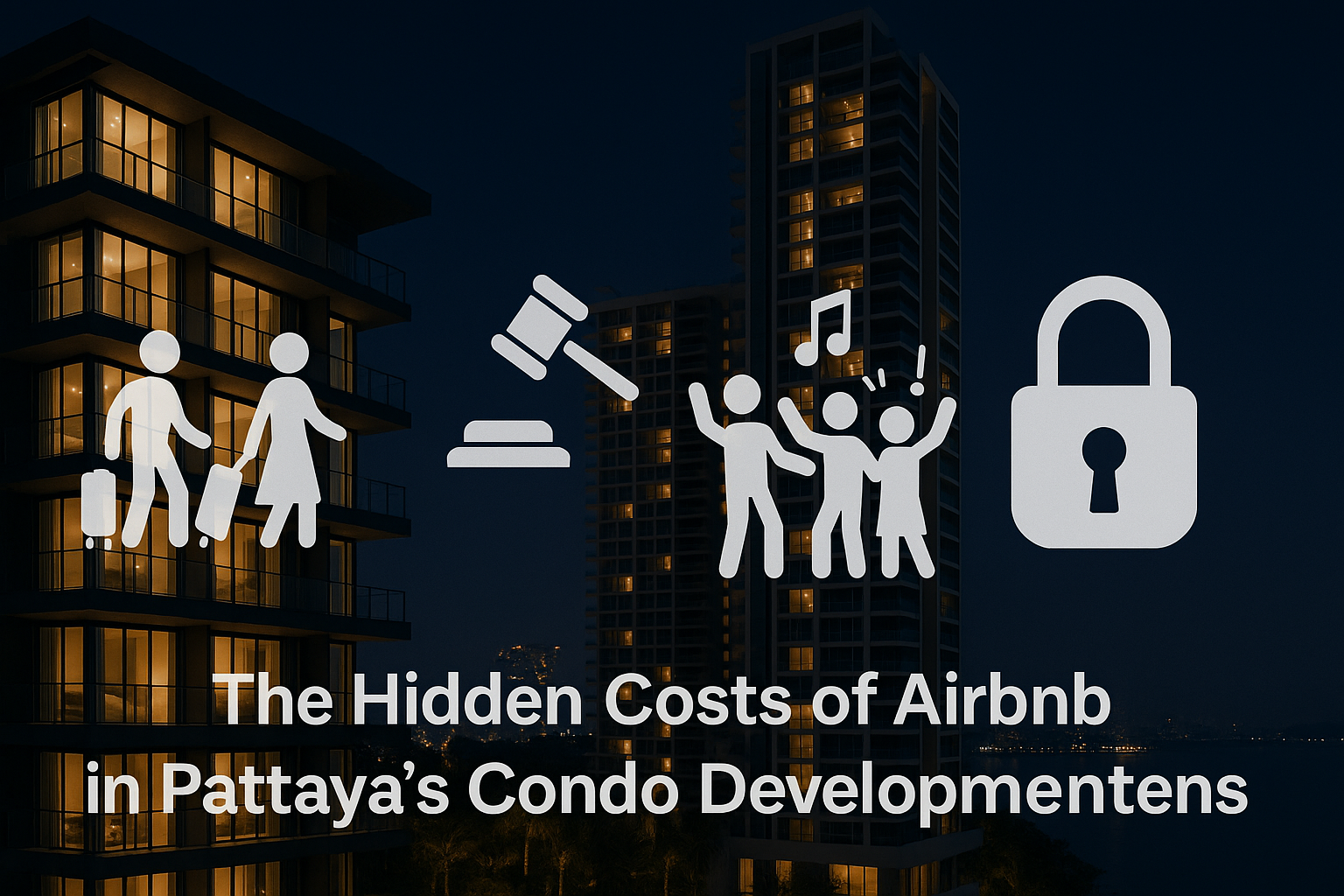
The Hidden Costs of Airbnb in Pattaya’s Condo Developments
Legal1734073367764x536471362649314940

The Hidden Costs of Airbnb in Pattaya’s Condo Developments

30 May 2025By Shaneruddle

Pattaya’s skyline is evolving rapidly, and so is the way people use property in the city. With the rise of platforms like Airbnb, short-term rentals have become a booming trend across many of Pattaya’s condominium developments. For tourists, the appeal is obvious—affordable, well-located accommodation with home comforts and no check-in counter. The number of short-term rental listings has exploded, and many property owners see it as a lucrative side income. But beneath the surface, this trend is creating more problems than it solves.

The Legal Grey Area: What You Need to Know

Most property owners and tenants don’t realise that short-term rentals—defined as stays under 30 days—are technically illegal in the vast majority of condominium buildings across Thailand. Operating a short-term rental legally requires a hotel license, which most condos are not zoned or registered for. Ignoring this can lead to fines, legal action, and even eviction. For foreign investors who may not be fully familiar with local laws, the risk is even higher. A profitable side hustle could quickly become a legal nightmare.

Disrupting the Peace: Quality of Life for Long-Term Residents

Condo developments are not designed to operate like hotels. Long-term residents—whether owners or tenants—expect a certain level of peace, order, and predictability. Short-term guests, on the other hand, are often in holiday mode. They may treat the building like a resort: loud parties, late-night noise, careless treatment of facilities, and general disregard for house rules. Unlike permanent residents, these guests have little accountability. They’re gone in a few days, leaving behind frustration for those who call the place home.

A Security Headache: Who’s Coming and Going?

When people change every few days, it becomes incredibly difficult for building staff to maintain proper security. With a revolving door of unfamiliar faces, the risk of theft, vandalism, or unauthorized access to restricted areas increases. It’s challenging to enforce rules when you don’t know who is supposed to be there in the first place. A stable, secure condo community simply can’t function when it resembles a budget hotel lobby.

Lower Property Values: A Quiet Consequence

You might think short-term rentals only affect neighbors, but they can hurt your investment too. Many serious buyers and long-term renters actively avoid buildings known for high Airbnb turnover. These projects are often perceived as noisy, unstable, or poorly managed. This lack of demand can directly impact resale value and rental yield for everyone in the building—not just those participating in short-term letting.

Final Thoughts: Protecting the Community and Your Investment

Airbnb and similar platforms are here to stay, but that doesn’t mean every condo should be part of the movement. The legal, social, and financial downsides are real. For property owners, the long-term gains of a stable, high-quality community far outweigh the short-term profits of illegal holiday rentals. It’s time for responsible owners and residents to speak up, demand better enforcement of regulations, and prioritise quality of life and property value over quick returns.

← Back to Blog